
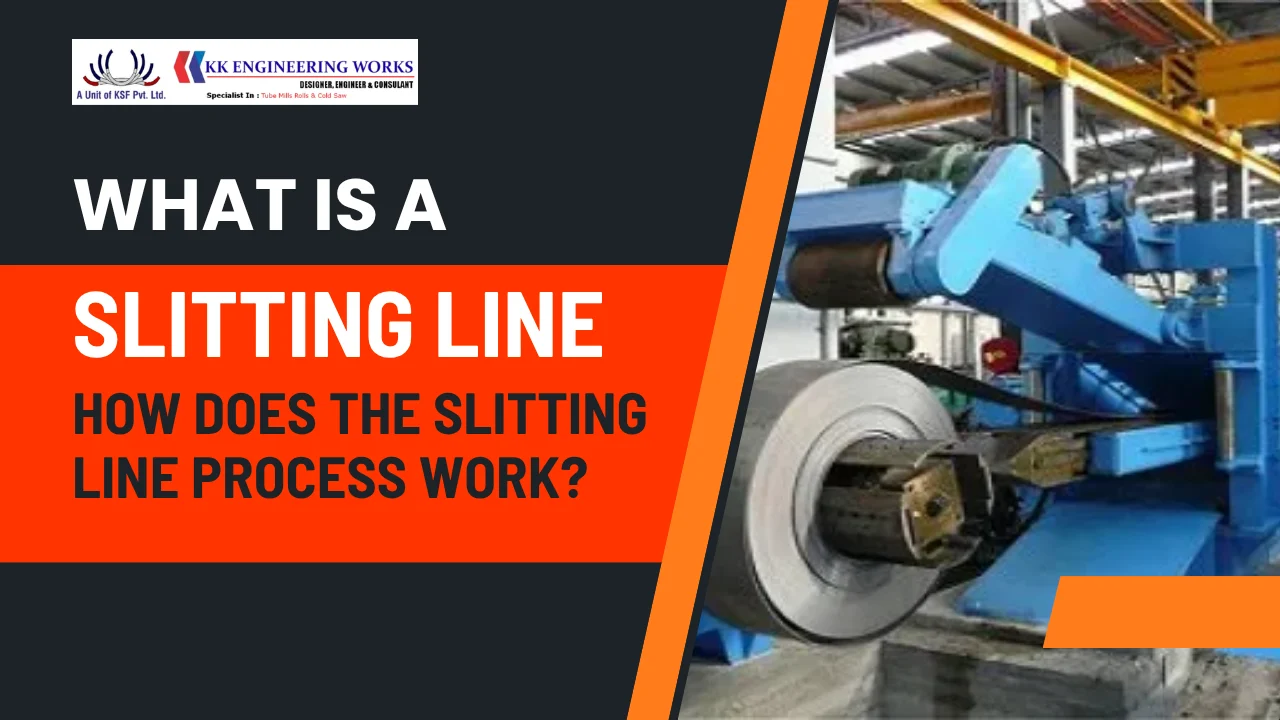
Metal processing industry, precision, speed, and material handling efficiency are very important for maintaining high production standards. Slitting Line Machine used in sheet metal processing industries converting large metal coils into narrower strips with accurate dimensions according to industrial production requirements.
KK Engineering is one of the trusted manufacturers and suppliers of advanced slitting line machines designed for high-speed and precision metal coil processing applications. The company provides reliable and customized slitting line solutions suitable for various industrial sectors.
What is a Slitting Line?
A slitting line is an industrial machine system used to cut wide metal coils into multiple narrower strips of specific widths. The process is commonly known as coil slitting. In this system, a large metal coil is fed into the slitting machine where rotating circular blades cut the metal into smaller strips while maintaining high dimensional accuracy.
Slitting lines are widely used for processing different materials such as:
- Stainless steel
- Mild steel
- Aluminum
- Copper
- Galvanized steel
- HR and CR coils
- Electrical steel
The machine is designed to handle continuous coil processing with high efficiency and precision. Industries use slit coils for manufacturing products such as pipes, tubes, automotive components, roofing sheets, electrical panels, appliances, and industrial equipment.
How Does the Slitting Line Process Work?
The slitting line process is used to cut wide metal coils into narrower strips with accurate dimensions according to industrial production requirements. This process is widely used in metal processing industries for manufacturing steel strips, coils, pipes, automotive parts, roofing sheets, and industrial components.
Step 1: Coil Loading
The process begins by loading a large metal coil onto the decoiler using a crane or coil car system. The decoiler securely holds the coil for smooth processing.
Step 2: Uncoiling the Metal Strip
The decoiler starts unwinding the metal coil and feeds the strip continuously into the slitting line machine.
Step 3: Leveling Process
The metal strip passes through a leveling unit that removes bends, coil memory, and uneven surfaces to ensure smooth and flat material processing.
Step 4: Slitting Operation
The strip enters the slitter head where multiple circular blades cut the wide metal coil into several narrower strips according to required widths. This is the main operation of the slitting line process.
Step 5: Scrap Collection
During slitting, edge trims and scrap materials are generated. The scrap winder collects the waste material for easy handling and disposal.
Step 6: Tension Control
The slit strips pass through a tension unit that maintains proper strip tension and alignment for smooth recoiling.
Step 7: Recoiling the Slit Strips
Finally, the processed narrow strips are rewound into separate coils using the recoiler section. These finished coils are then ready for further industrial applications.
Importance of Slitting Line Machines
Slitting line machines are highly important in the metal processing industry because they help manufacturers produce metal strips in exact sizes required for further production processes. Instead of manually cutting metal sheets, slitting lines provide automated, high-speed, and accurate processing.
Some major advantages include:
- High production efficiency
- Accurate strip width cutting
- Reduced material wastage
- Smooth edge finishing
- Faster processing speed
- Better productivity
- Continuous operation capability
- Lower labor requirements
Modern industries require precision-based production, and slitting lines help achieve consistent quality standards while increasing operational efficiency.
Main Components of a Slitting Line
A slitting line consists of several important sections that work together to complete the coil slitting process efficiently.
1. Decoiler
The decoiler holds the large metal coil and feeds it into the slitting line machine. It helps unwind the coil smoothly during processing.
2. Coil Car
The coil car is used to load heavy metal coils safely onto the decoiler. This helps improve handling efficiency and reduces manual work.
3. Pinch Roll and Leveler
The pinch roll feeds the metal strip forward, while the leveler removes coil set and improves flatness before slitting.
4. Slitter Head
The slitter head is the most important part of the machine. It contains multiple circular knives or blades mounted on shafts. These blades cut the metal coil into narrower strips according to required widths.
5. Scrap Winder
During the slitting process, edge scrap is generated. The scrap winder collects and winds the waste material for easy disposal.
6. Tension Unit
The tension unit maintains proper strip tension during recoiling to ensure smooth winding and prevent strip damage.
7. Recoiler
The recoiler rewinds the slit strips into smaller coils after the cutting process is completed.
Features of Slitting Line Machines
- High Precision Cutting – Provides accurate strip width and smooth edge finishing.
- High-Speed Operation – Ensures faster coil processing and improved productivity.
- Heavy Duty Construction – Built with strong materials for long industrial use.
- Automated Control System – Offers easy operation and better production control.
- Low Maintenance – Designed for reliable performance with minimal servicing needs.
- Continuous Processing – Suitable for nonstop industrial production operations.
- Customized Design – Available according to coil width, thickness, and capacity requirements.
- Efficient Material Handling – Ensures smooth coil feeding, slitting, and recoiling process.
- Reduced Material Wastage – Improves production efficiency and minimizes scrap generation.
- Energy Efficient Performance – Consumes less power while maintaining high operational efficiency.
Applications of Slitting Line Machines
- Automotive Industry – Used for processing metal strips for vehicle parts and components.
- Pipe and Tube Industry – Suitable for manufacturing steel pipes and tubes.
- Construction Industry – Used for roofing sheets, structural sections, and building materials.
- Electrical Industry – Required for transformer cores, panels, and cable tray production.
- Appliance Manufacturing – Used in refrigerators, washing machines, and kitchen equipment manufacturing.
- Metal Furniture Industry – Helps produce cabinets, racks, and furniture components.
- Engineering Industries – Used for precision metal strip processing applications.
- Steel Processing Plants – Suitable for continuous coil cutting and strip preparation.
- Packaging Industry – Used for metal strip processing in packaging material production.
- Industrial Equipment Manufacturing – Supports fabrication of various industrial machine components.
Why Choose KK Engineering for Metal Slitting Line?
KK Engineering focuses on advanced engineering, quality manufacturing, and customized industrial machinery solutions. The company offers high-performance slitting line machines designed for precision metal processing and long-lasting industrial operation.
Their machines are manufactured using premium-quality components and modern technology to ensure:
- High production efficiency
- Smooth machine operation
- Precision slitting performance
- Energy-efficient processing
- Low maintenance requirements
- Reliable long-term operation
Our experienced engineering team at KK Engineering provides complete support from machine design and manufacturing to installation and after-sales service.
Conclusion
Slitting line machines are an essential part of the metal processing industry because they provide accurate, efficient, and high-speed coil cutting solutions for various industrial applications. From automotive and construction industries to electrical and appliance manufacturing, slit coils are widely used in modern production systems.
With advanced technology and precision engineering, KK Engineering delivers reliable and customized slitting line solutions that help industries improve productivity, reduce material wastage, and maintain high-quality production standards.